How to film a takeaway kitchen with a smartphone, without slowing service
You do not need a full film crew to tell an honest story about a working takeaway. You do need permission, a clear plan and a filming window that never interferes with service. This guide is for independent UK takeaway and quick-service operators who want to show the work behind the food without staging a fake rush.
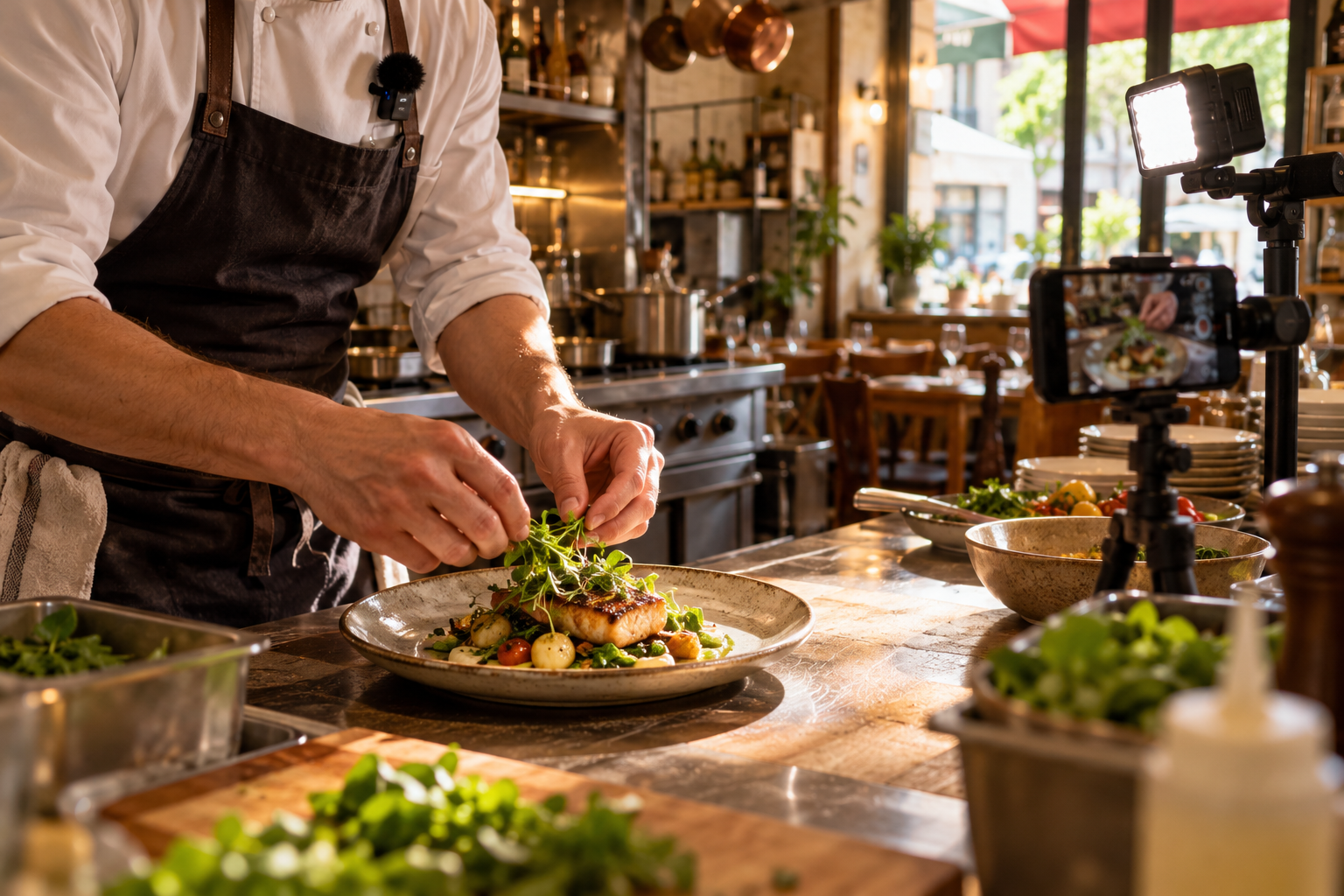
Choose a quiet, repeatable 30-minute window
Film during preparation, not your busiest collection period. Ask the shift leader to identify a natural gap: before doors open, between delivery waves or during a controlled prep session. Put the phone on a small tripod outside walkways and keep staff access to handwashing, refrigeration and food preparation unrestricted.
Assign two roles at most: one person makes the food as usual; another checks framing, sound and consent. A production plan with three stations—ingredients, preparation and final handover—gives you a narrative without asking staff to redo a whole order.
Five shots worth capturing
Record each shot for several steady seconds before moving the phone. Avoid aggressive digital zoom. If a food item is prepared only for the camera, say so rather than implying it is a customer's order.
- A short establishing frame showing the exterior or kitchen entrance, with permission to film the premises.
- The preparation ingredients laid out as they genuinely appear before a normal service.
- Close-ups of hands doing a real signature technique: kneading, slicing, grilling or finishing.
- A wider frame showing how the kitchen team collaborates, only where every identifiable person has agreed.
- The final dish in natural light, followed by a real collection or packaging moment where no private customer information is visible.
Sound and lighting before camera upgrades
Clear voice is more useful than expensive camera equipment. If a chef explains one small detail, use a lavalier microphone positioned away from steam, hot surfaces and moving equipment. Record a short test before filming the full explanation.
A small diffused light can help in a dark kitchen, but position it securely without obstructing anyone. Do not place lights, stands or cables where food hygiene or safe access could be affected. If the light makes the food look dramatically different from its usual appearance, use a simpler setup.
Permissions, privacy and truthful editing
Confirm permission from the business and every identifiable colleague or visitor who appears. Do not film order tickets, delivery customer names, phone numbers, payment screens or other personal details. Customer footage needs separate consideration, and minors should not appear without appropriate permissions.
The finished edit should show what the kitchen actually does. Keep speech accurate, mark illustrative inserts when needed and never fabricate reviews, awards or customer reactions. A useful ending explains what makes this specific restaurant distinctive rather than promising a sales increase.
A simple publishing checklist
- Export a clear vertical cut with readable captions and retain the original files.
- Ask the owner and anyone whose rights require sign-off to review the cut before posting.
- Write a specific caption about the people and preparation shown; avoid generic promotional claims.
- Check that music, trademarks and footage are cleared for the intended channels.
- Link viewers to a real restaurant website, ordering page or profile, without inventing discounts or opening hours.
What to measure next
Track which real questions viewers ask about your kitchen, not just views. Note profile visits, website clicks and enquiries where you have trustworthy measurement. Compare a few different narrative angles over time before making any decisions about investing in equipment or paid promotion. A short honest film is a starting point for customer familiarity, not a guarantee of demand.
FAQ
Can I film a takeaway with only one phone?
Yes, if the kitchen agrees and you can record safely. Stable framing, clear audio, consent and honest content matter more than equipment count.
Should I record during the busiest hour?
Usually not. A quiet preparation period avoids obstructing service and allows staff to work safely.